
Main content starts here.
Content of research
Research on cherry tree preservation
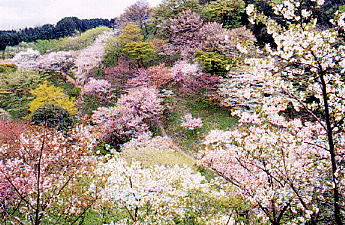
The Cherry Tree Preservation Forest at Tama Forest Science Garden is one of the largest collections of famous cherry trees and their varieties, and it serves as a valuable genetic resource. There is a lot of confusion regarding traditional cherry trees varieties, which date back to the Edo period, due to issues such as some trees of the same variety having the different names and some trees of different varieties having the same name. As such, the Science Garden is working to establish methods for the accurate identification of these trees, involving morphological surveys, literature surveys, gene analysis, and so on. The Science Garden is also examining accurate management methods and moving ahead with research aimed at the conservation and future utilization of cherry trees.
Research on suburban forests
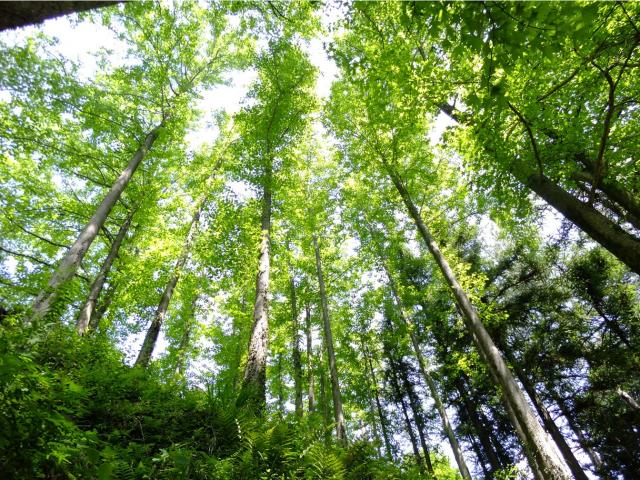
Deciduous broad-leaved secondary forests in suburban areas have been maintained as so called satoyama (semi-natural area) forests since long ago for wood fuel production and agricultural uses, but they have recently lost these purposes and are being neglected. In order to soundly conserve suburban forests, the Science Garden is shedding light on forest distribution and plant diversity, and conducting research regarding topics such as vegetation changes resulting from differences in management methods.
Changes in mammal species inhabiting the Tama Forest Science Garden
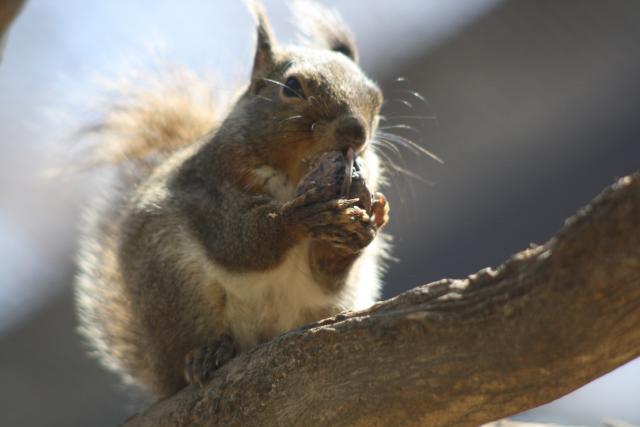
At the Tama Forest Science Garden, research on mammals has been ongoing since the 1960s, and as many as 20 species of mammals belong to 7 orders and 14 families have been found to inhabit the area. The habitat of mammals is changing due to the urbanization of the surrounding area as well as changes in the forest environment. Especially, the habitat of Japanese giant flying squirrels and Japanese squirrels has been shrinking. As we investigated the breeding biology of Japanese giant flying squirrels by using a nest box with a video camera, we found the they require a long child-rearing period of up to 300 days, and hence it is important to maintain an environment where females can breed in a good condition to maintain the population. We have prepared guide spots and pamphlets for observing Japanese giant flying squirrel, which have become a rare sight in the suburbs of Tokyo.
Research on Suburban Wild life Manegement
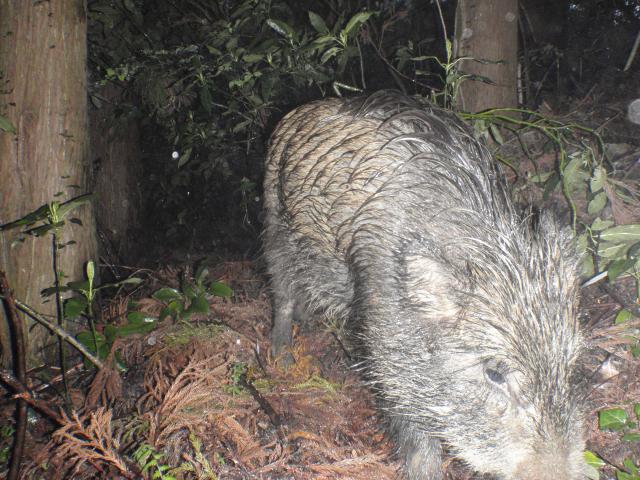
In recent yers, it has been reported througout Japan that the habitat of wild boars and deer is widening. As a result, these animals are entering into cities, which causes conflict with humans. Wild boars have been found to inhabit the Tama Forest Science Garden since 1999, and deer since 2013. The frequency of sightings increases every year. We therefore conducted research on developing a control system of urban wild life, in order to take measures against this new problem of wild boars and deer inhabiting forests near cities. We have also prepared guide spots and pamphlets so that people can learn about the biology and management of wild boars that live near cities.
Research of forest environmental education
The Science Garden is conducting research on measures for utilizing research results in various fields of forest science with the aim of developing human resources who will contribute to the realization of a sustainable society that coexists with forests. These fields include the development of learning programs and teaching materials that help schools and so on carry out forest environmental education, and the development of education methods for nurturing human resources who will support the field of forestry.
Copyright © Forest Research and Management Organization. All rights reserved.