
Home > International Partnerships > Collaborative Research > Designing Artificial Soil to Increase Soil Carbon Sequestration in Tropical Degraded Lands
Update:June 4, 2025
Main content starts here.
Designing Artificial Soil to Increase Soil Carbon Sequestration in Tropical Degraded Lands
1. Partners
Mulawarman University, Indonesia
2. Research Period
FY 2021–2027 FOREST* Program (Japan Science and Technology Agency)
*Fusion Oriented REsearch for disruptive Science and Technology
3. Lead Researcher
FUJII, Kazumichi (Department of Forest Soils; Current affiliation: Fukushima Institute for Research, Education and Innovation (F-REI), since April 2025)
4. Background
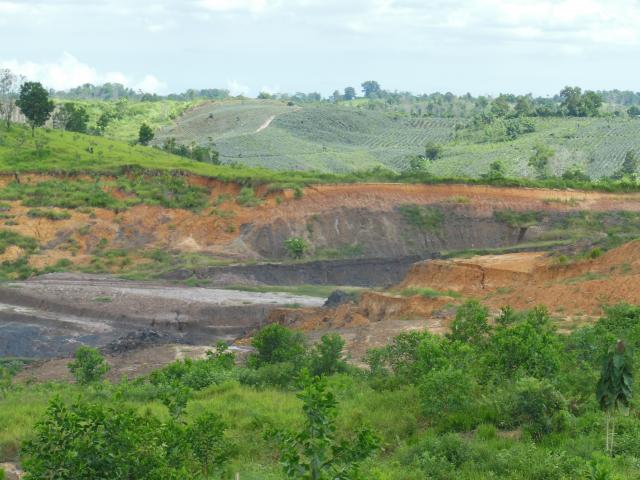
In the tropics, soil degradation causes nutrient depletion and forest degradation. We clarified the mechanisms by which deforestation and continuous cropping accelerate soil acidification and the loss of organic matter. To reconcile feeding the world’s population and for forest conservation, soil genesis must be accelerated without depleting soil fertility.
5. Research Goal
To identify biological processes to maximize soil carbon sequestration in tropical forests.
6. Research Strategy
We will identify plants, microorganisms, and clay minerals that accelerate soil genesis. By admixing microorganisms with plant-derived and clay materials that increase soil carbon sequestration, we will demonstrate that soil carbon storage in degraded land can be increased to the level seen in natural forests.
7. Expected Outcomes
We will develop a new approach to restore ecosystems and soil using artificial soil and develop a soil remediation method that resolves the dilemma of the relationship between poverty and soil degradation.
8. Publications
FUJII K., Toma, T., Sukartiningsih (2021) Comparison of soil acidification rates under different land uses in Indonesia. Plant and Soil https://doi.org/10.1007/s11104-021-04923-y
Fujii K, Hayakawa C, Sukartiningsih (2024) Drought-induced turnover of soil microbial biomass increases nutrient subsidies for the reproduction of tropical forest. Biogeochemistry, https://doi.org/10.1007/s10533-024-01137-z
Fujii K, Zheng J, Zhou Z, Fang Y (2024) Quantitative assessment of soil acidification in four Chinese forests affected by nitrogen deposition. Plant and Soil, https://doi.org/10.1007/s11104-024-06602-0
Copyright © Forest Research and Management Organization. All rights reserved.